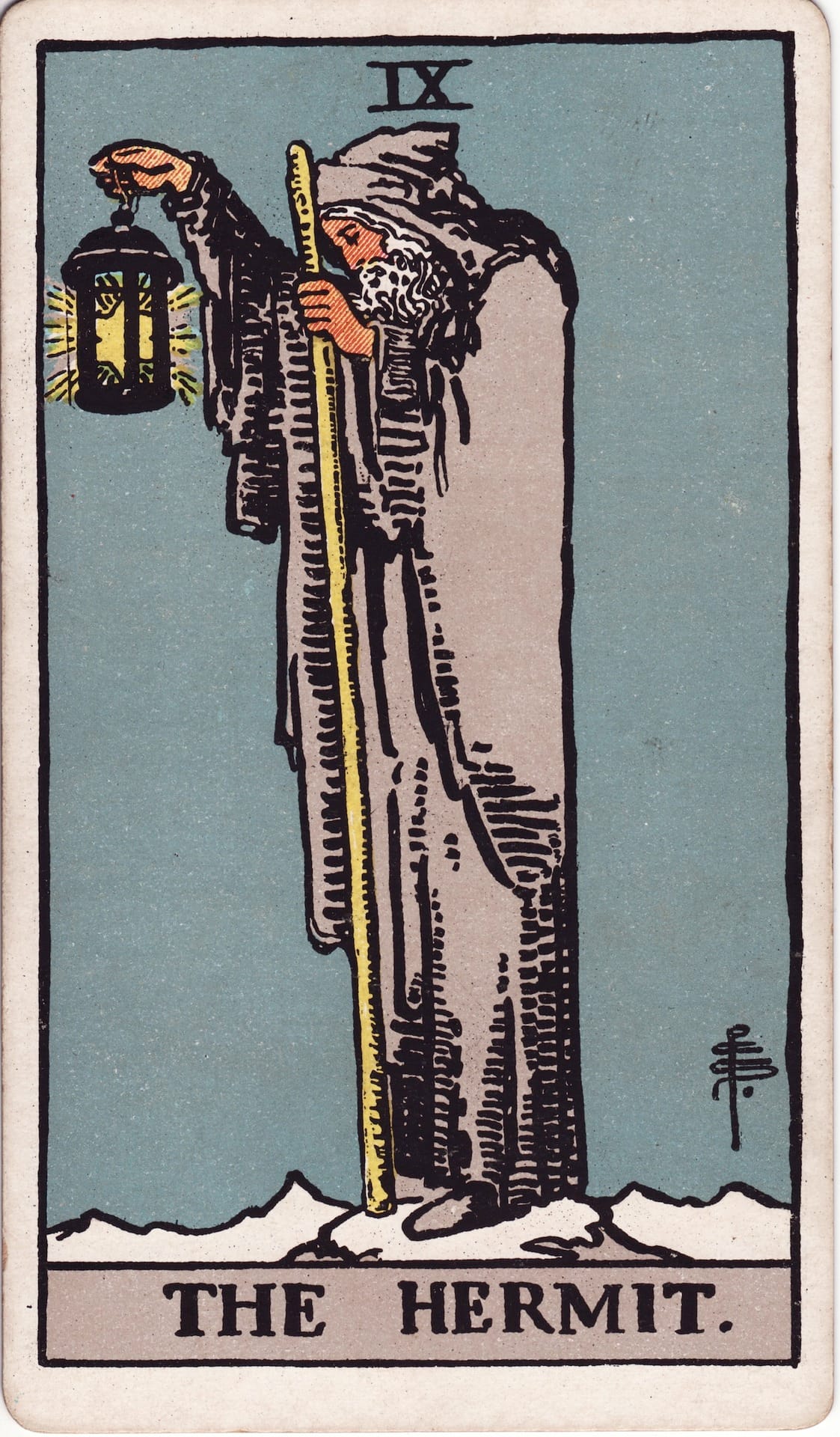
The Hermit is the quintessential card of introspection and the "unorthodox solitary path to wisdom". Sources explicitly associate this card with being an "introvert" or someone who embraces solitude to turn their focus inward. Just as Cain argues that solitude is a catalyst for innovation, The Hermit signifies a withdrawal from the outer world to activate the unconscious mind and inner awareness.
▶READ MORE ABOUT WHY THIS MAPPING...
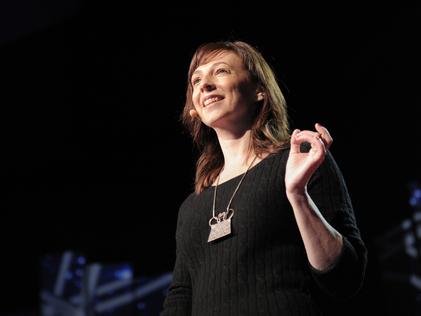
Susan Cain’s talk challenges the modern societal bias that equates loudness with leadership and gregariousness with happiness. The Hermit serves as the perfect archetypal map for this talk because the card explicitly represents the power of "introversion" and the conscious choice to withdraw from the noise of the world to cultivate inner wisdom.
1. The Productive Power of Solitude Cain argues that solitude is a crucial ingredient for creativity and innovation. Similarly, The Hermit does not represent isolation for its own sake, but rather a "withdrawal from the outer world for the purpose of activating the unconscious mind". While society often views being alone as a negative state, The Hermit teaches the vital difference between being "lonely" and being "alone". The card validates the introvert’s need to step away from the "rat race" to see the big picture, ruling over "serious scholarship," writing, and "artistic retreats",. Just as Cain suggests that deep thought requires freedom from constant social stimulation, this card signifies a necessary "detachment" and the "way of prudence" in searching for truth.
2. The Inner Light and "Soft Power" Cain emphasizes that introverts possess a unique power—a "quiet" leadership that is often overlooked. In the Tarot, The Hermit carries a lantern, symbolizing "individual insight" and the "quintessential spirit" inherent in life. This lantern signifies that the Hermit has discovered his "authentic self" in the quiet and can now guide others, not by force, but by the "simple presence" of his light,. This mirrors Cain's assertion that introverts lead not by dominating the room, but by deep contemplation and substance. The card indicates a person who sees the world through their "own light," walking in the direction of their own thoughts rather than following the "traditionalist" path of the crowd.
3. Resistance to "Groupthink" A central tenet of Cain’s talk is the criticism of the "New Groupthink," which forces collaboration at the expense of individual deep work. The Hermit aligns with this resistance to collective noise; he represents the "unorthodox solitary path to wisdom" as opposed to the institutional or collective wisdom represented by The Hierophant. The Hermit’s journey is one of "individual illumination," offering an experience not confined to the group but available to the human being who is willing to stand apart. It is a rejection of the superficial for the profound, validating the introvert's preference for depth over breadth.
4. The Active Nature of Quiet Finally, Cain posits that introversion is an active, vital stance, not a passive failure to be social. Similarly, The Hermit is not truly passive; his stillness is an "active" withdrawal. He creates an "inner stillness" where capacities too fugitive for everyday use may emerge. The card represents "attainment" and the "eternity of attainment in the spirit," proving that the quiet path leads to the summit just as surely, if not more so, than the loud one,.
Analogy: The Hermit is to the Tarot what the "deep diver" is to the ocean; while others skim the surface on jet skis (The Chariot), the Hermit plunges into the silence of the depths to retrieve the pearls that can only be found where it is quiet, dark, and still.