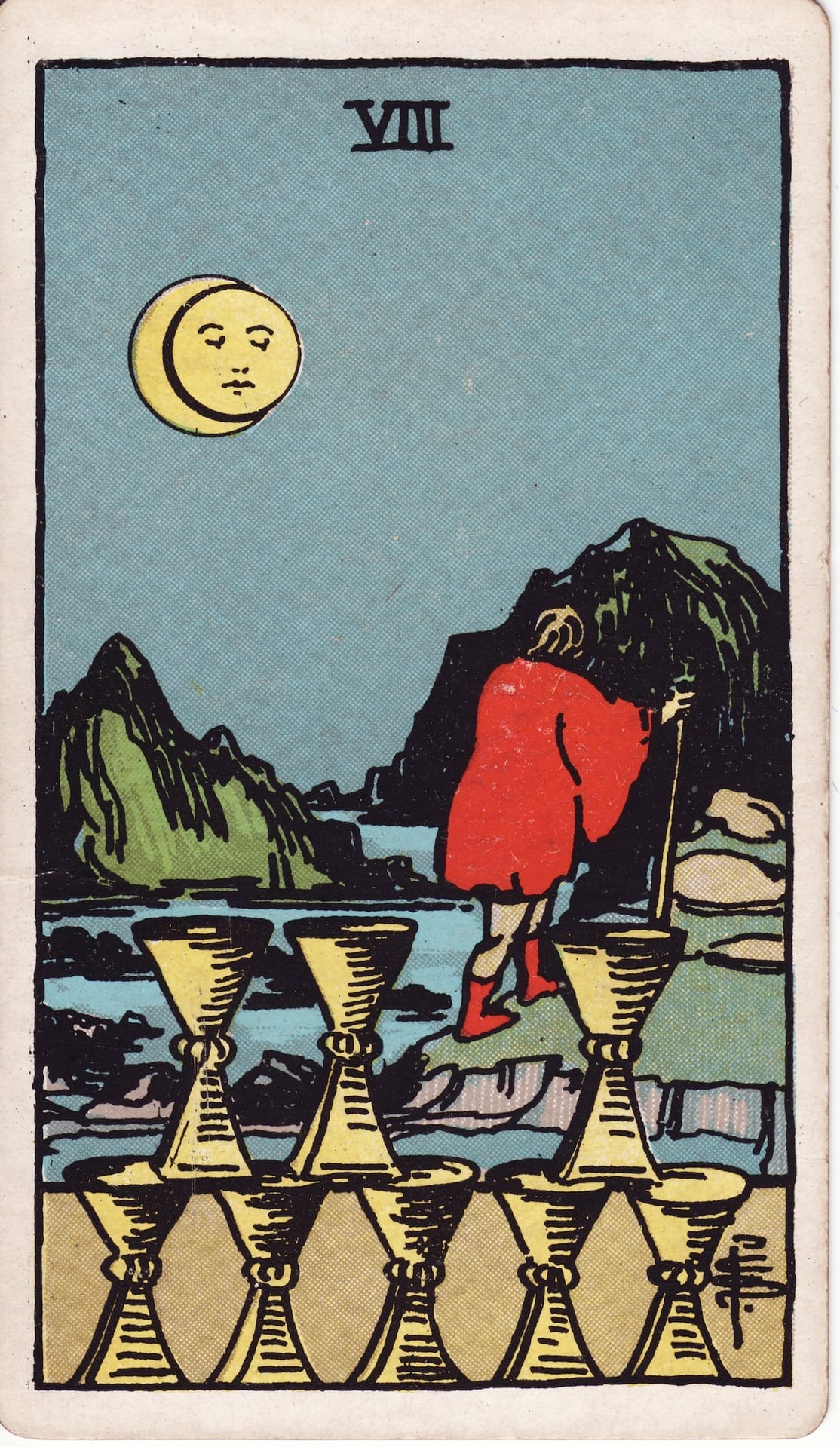
This card symbolizes the voluntary abandonment of superficial stability or material success in favor of a deeper, more spiritual truth. Just as Cain argues that melancholy and longing are vital for human connection and creativity, the Eight of Cups depicts a figure walking away from a stable row of standing cups to undertake a difficult, solitary journey into the unknown, driven by the realization that "happiness" alone is no longer enough to sustain the soul.
▶READ MORE ABOUT WHY THIS MAPPING...
The Eight of Cups serves as the perfect tarot archetype for the "bittersweet" and the power of rainy days for the following reasons:
1. The Search for Higher Meaning Over "Happiness"
Susan Cain’s work often challenges the cultural mandate of constant positivity. Similarly, the Eight of Cups is distinct from other cards of loss (like the Five of Cups) because the cups in the image remain upright; nothing has been knocked over or destroyed. The situation being left behind is stable and perhaps even materially successful, yet the figure realizes it is spiritually insufficient. The card represents the profound psychological shift where one chooses the "rainy day", the difficult, uncertain path, over the sunny status quo because the status quo lacks a deeper emotional or spiritual resonance,.
2. The Power of "Spiritual Unrest"
The mood of this talk, rainy and contemplative, mirrors the atmospheric energy of the Eight of Cups. In Secrets of the Waite-Smith Tarot, the musical association for this card is Cesar Franck, described as "rich, sombre, a sense of spiritual unrest". The visual landscape of the card, based on the Romney Marshes under a lunar eclipse, was designed to evoke a dream-like, nightmarish, or deeply introspective state that suggests the "decline of a matter" and the haunting sense of lost opportunities. This aligns with the "hidden power" of sad songs to connect us to the sublime parts of existence that sunny days cannot reach.
3. The "Missing Cup" and the Value of Longing
Jessica Dore in Tarot for Change notes that the stack of cups in the card features a gap where a ninth cup should go, implying a sense of "not-enough-ness". This gap represents longing... a central theme in Cain’s work. The figure in the card walks away not because they have failed, but because they are seeking the thing that is missing. This journey requires "coping skills" to endure the grief of departure, validating that the sadness of leaving is a necessary tool for evolution rather than a symptom of failure,.
4. The Transition from Water to Air
In Seventy-Eight Degrees of Wisdom, Rachel Pollack describes this card as the movement from the "vagueness of Water" (emotion) to the "specific knowledge" of the Hermit’s mountain (Air/Intellect). This mirrors the function of listening to sad songs or embracing rainy days: we use these fluid, emotional states to process our feelings so we can arrive at a clearer, higher understanding of who we are. The card signifies that "the time to leave has come," and that remaining in the comfort of the known would ultimately lead to stagnation.